Lynnman Warehouse
The Reincarnationist PapersLynnman Warehouse is the Commerce building where Evan Michaels carries out the arson that turns a deliberately controlled plan into a near-trap. Its boarded windows, unprotected ceilings, and deteriorated surroundings are not incidental scenery: the building’s physical arrangement gives Evan opportunities to enter and prepare it, then helps the fire spread beyond the limits he expected.
Setting and Physical Layout
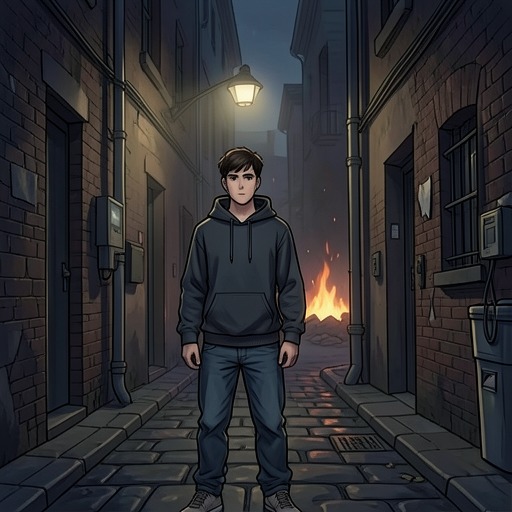
The warehouse stands in a distressed neighborhood where garbage and broken window glass cover the sidewalks and only one building in every four or five appears occupied. It is a two-story brick structure, painted gray, with tall narrow windows along the second floor. Two larger street-facing windows have been boarded with plywood, weathered to nearly the same gray as the exterior. In the alley, a lone floodlight from an occupied warehouse farther down provides a small amount of illumination.
The entrance is a conspicuous iron door, four feet wide and eight feet high, reinforced with horizontal riveted steel straps. It looks more suited to a prison than a warehouse. Evan can nevertheless unlock its deadbolt quietly with a key. On his first inspection, the weak alley light reaches only a short way inside; the upstairs windows offer some illumination, but much of the interior remains dark.
The ground floor is a broad, dark room with a concrete floor painted battleship gray. Eight roughly hewn square posts support the second story, while exposed floor joists, crossbeams, and electrical conduits form a cross-hatched ceiling. A narrow wooden staircase rises along the back wall beside a dingy bathroom. Above, decades of footsteps have worn the centers of the rough-cut stairs smooth. Streetlights cast long rectangles through the tall windows onto the upstairs hardwood floor. Evan tests the windows with a newspaper-covered hand, but paint smeared over the wooden frames has sealed them shut.
Evan’s Survey and Preparation
Evan first examines the building from outside, counting down the numbers on nearby transoms and door frames until he locates it. He handles the entrance with care: a folded newspaper covers the door handle as he turns the key, a precaution intended to leave no fingerprints. Inside, he uses his lighter to inspect the ground floor and stairwell, noting the structure and the absence of any sign of life. Upstairs, the sealed windows and ceiling become central to his assessment. He decides the fire will have to begin there.
On a later visit, Evan returns with a truck and unloads equipment through the alley entrance while wearing black rubber gloves. He closes the door behind him and pauses on the stairs until his racing heart and shaking legs settle. The brighter daylight reveals details he missed in the darkness, including two small boxes beside a rear support post. He carries the equipment upstairs in one trip. The heat, already in the mid-nineties outside, feels increasingly oppressive as he climbs, and the second floor seems smaller in the daylight than it had during his earlier inspection.
The Fire and Evan’s Escape
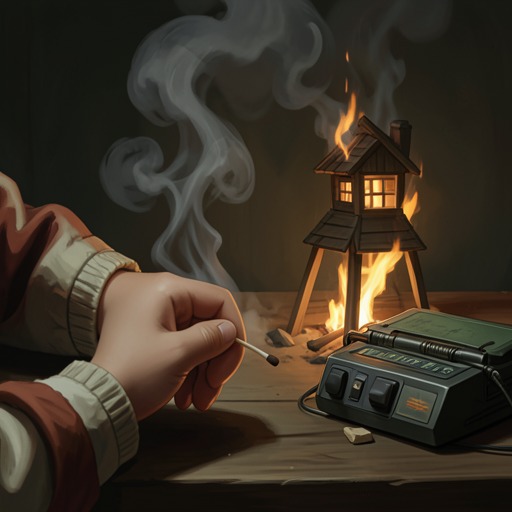
Evan later approaches the warehouse at night from a bus stop ten blocks away, carrying four medium-sized stones. The alley light remains on, enough for him to find the key. Wearing gloves, he enters with a rucksack and detects a faint smell of solvents drifting down from upstairs. In the dark back room, he arranges six cigarettes—four from a full-flavor pack and two from a mild pack—around a lighter on the fourth stair, with their burning ends overhanging the step. He also throws a wine bottle and a gin bottle onto the concrete floor; one breaks, while the other lands by the bathroom door. His handling of the cigarettes and bottles is deliberate, part of an attempt to make the scene appear random.
The fire does not remain within the boundaries Evan expects. Flames roll down from the ceiling and force him to his knees. He checks his hair and presses the cool palm of a glove against his scorched neck. The fire on the floor is proceeding as planned, but flames have spread across the ceiling above the strip he had considered safe. Their downward advance threatens to cut off his escape. He crawls toward the top of the stairs, gets two-thirds of the way down headfirst, then stands and hurries to the entrance. The roar above him sounds like a jet landing on the second floor.
Evan opens the deadbolt and leaves the warehouse door open as he escapes into the alley. From across the street, he sees that the heat has melted two more windows and that flames are boiling into the night sky. He walks away into the darkness of Los Angeles, leaving the fire raging inside the empty building. A police spotlight catches him in the alley. He keeps walking, but realizes that the warehouse key is still in his pocket, a piece of evidence he has failed to remove.
Aftermath and Significance
The following night, Poppy identifies the fire as the one at Lynnman Warehouse on Marion after hearing the fire brigades pass. Evan confirms that he was there. The building thus remains present in the story after the flames: first as a carefully studied site, then as the scene of a fire whose spread Evan misjudges, and finally as the subject of an admission to Poppy.
Its architecture gives the episode its particular tension. Evan relies on the warehouse’s darkness and accessible entrance to prepare the arson, but the sealed windows and unprotected ceilings offer no easy escape once the fire moves overhead. The same structure that lets him enter without notice becomes a trap he must crawl out of. The warehouse is left burning when he flees; the evidence establishes the fire’s force and the police response, but does not specify the building’s ultimate fate.